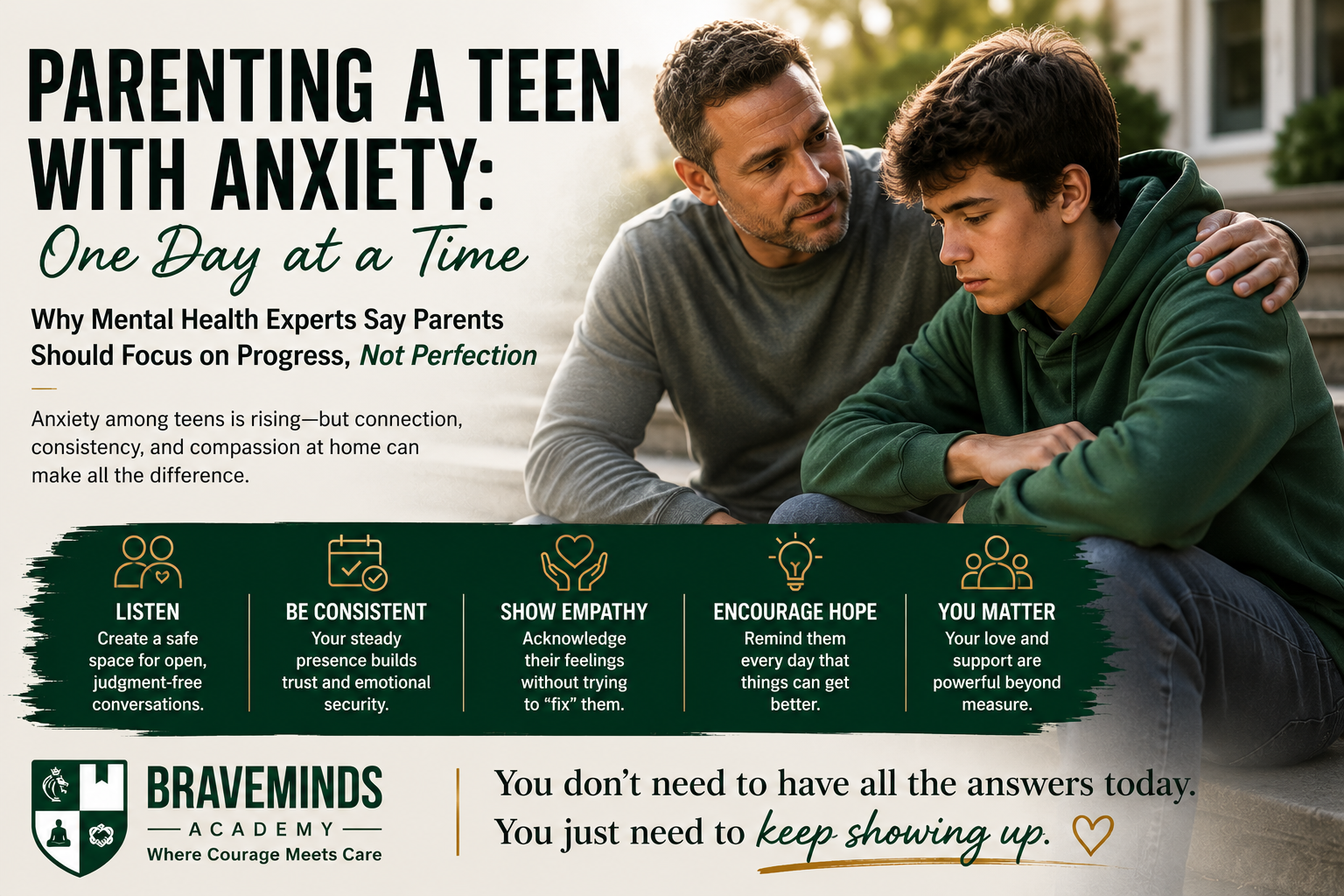
As adolescent anxiety continues to impact families, experts say family connection and consistency remain among the most powerful tools for helping teens heal.
TAMPA, FL, UNITED STATES, June 20, 2026 /EINPresswire.com/ — Parenting a teen with anxiety can leave even the most dedicated parents feeling overwhelmed, exhausted, and uncertain about what to do next. As rates of adolescent anxiety continue to rise across the United States, more families are searching for answers about the signs of teen anxiety, how to help a teenager with anxiety, and when professional support may be needed.
Across Florida and throughout the Tampa Bay region, more families are seeking answers as adolescent anxiety, depression, emotional withdrawal, school avoidance, and behavioral health challenges continue to affect young people at increasing rates.
For many parents, recognizing the signs of anxiety is only the beginning. Understanding where to turn for help can feel equally overwhelming.
Mental health professionals emphasize that early intervention often leads to better outcomes, particularly when anxiety begins affecting school performance, family relationships, social development, emotional regulation, or daily functioning.
Families searching for teen anxiety treatment in Florida are increasingly looking for programs that provide more than symptom management. They want comprehensive care that addresses the underlying causes of emotional distress while helping adolescents develop healthy coping skills, confidence, resilience, and stronger family connections.
The Growing Teen Mental Health Crisis
According to the National Institute of Mental Health (NIMH), nearly one in three adolescents will experience an anxiety disorder during their lifetime.
The CDC has also reported increasing levels of persistent sadness, hopelessness, and emotional distress among teenagers in recent years.
Mental health professionals across Florida and throughout the Tampa Bay region report that more families are seeking support for:
Teen anxiety
Teen depression
School refusal
Social isolation
Emotional dysregulation
Behavioral health concerns
For some teens, outpatient counseling may provide the support they need. For others experiencing more significant challenges, residential mental health treatment in Florida may offer a higher level of structure, clinical support, and therapeutic intervention.
Mental health treatment for teen boys in Florida often requires a specialized approach. Anxiety in adolescent boys frequently presents differently than it does in adults or younger children, making individualized treatment, family involvement, academic support, and evidence-based therapies especially important.
As awareness of adolescent mental health continues to grow throughout Tampa Bay and across the state, more Florida families are recognizing that anxiety is treatable, recovery is possible, and no young person should have to face these challenges alone.
Whether a family is seeking guidance, support, or a residential treatment program designed specifically for adolescent boys, the most important step is often the first one: reaching out for help and beginning the journey toward healing. Parenting has never come with a roadmap, but for families navigating teen anxiety, the journey can feel especially overwhelming.
Mental health professionals across the country report growing concerns surrounding adolescent anxiety, emotional withdrawal, school avoidance, social isolation, and depression among teenagers. While parents often focus on finding solutions, experts say one of the most powerful tools available may be something much simpler: a consistent connection.
“Many parents feel enormous pressure to fix everything their child is experiencing,” said Dr. Travis Atchison, PhD, LCSW-QS, MCAP, Clinical Director at Braveminds Academy. “But healing is rarely about one perfect conversation or one breakthrough moment. More often, it comes from creating a safe environment where a teen feels supported, understood, and connected over time.”
Teen Anxiety Often Looks Different Than Parents Expect
Anxiety disorders are among the most common mental health challenges affecting adolescents today. Yet many parents struggle to recognize the warning signs because anxiety frequently presents differently in teenage boys.
Rather than appearing as visible fear or worry, anxiety may manifest as:
Emotional withdrawal
Irritability or anger
School avoidance
Declining academic performance
Perfectionism
Social isolation
Sleep disturbances
Physical complaints such as headaches or stomachaches
Excessive gaming or screen time
Teen Anxiety by the Numbers
Anxiety disorders are now among the most common mental health conditions affecting adolescents in the United States. According to the National Institute of Mental Health (NIMH), approximately 31.9% of adolescents experience an anxiety disorder at some point during their lives.
The Centers for Disease Control and Prevention (CDC) has also reported significant increases in persistent feelings of sadness, hopelessness, and emotional distress among teenagers in recent years.
Mental health professionals say these numbers highlight the growing need for early identification, family involvement, and evidence-based treatment for teen anxiety, depression, and emotional regulation challenges.
For many families, recognizing the signs early can make a substantial difference in long-term outcomes.
According to mental health professionals, these behaviors are often misunderstood as defiance, laziness, or a lack of motivation when they may actually be symptoms of underlying emotional distress.
Teen anxiety is more than occasional worry or nervousness.
It is a mental health condition that can affect a young person’s emotions, behavior, academic performance, social relationships, physical health, and overall quality of life.
While every adolescent experiences stress, anxiety becomes concerning when it begins interfering with daily functioning, school attendance, friendships, family relationships, sleep, or emotional well-being.
Common anxiety disorders affecting adolescents include:
Generalized Anxiety Disorder (GAD)
Social Anxiety Disorder
Panic Disorder
Separation Anxiety
Performance Anxiety
School Anxiety
Many teen boys experience anxiety differently than adults expect, making early identification especially important.
Why Anxiety in Teen Boys Often Goes Undetected
One of the biggest challenges facing parents is that anxiety in teenage boys rarely looks like anxiety.
Many boys have been conditioned to hide emotional vulnerability.
Rather than expressing fear or sadness, they may display:
Anger
Irritability
Defiance
Isolation
Perfectionism
Excessive gaming
Emotional numbness
School avoidance
As a result, parents frequently mistake anxiety for behavioral problems when the underlying issue is emotional distress. This is one reason mental health experts emphasize the importance of understanding the emotional meaning behind behavior.
When Anxiety Leads to School Avoidance
Many parents are surprised when anxiety begins affecting school attendance.
School avoidance can include:
Frequent absences
Requests to stay home
Nurse visits
Panic symptoms before school
Difficulty leaving the house
Mental health professionals report that school refusal is often connected to underlying anxiety disorders.
Early intervention can prevent academic, social, and emotional consequences from becoming more severe.
The Connection Between Teen Anxiety, Social Media, and Gaming:
Many parents notice increased gaming or screen time when their teen is struggling emotionally.
While gaming itself is not necessarily harmful, excessive screen use can sometimes become a coping mechanism for anxiety, loneliness, social stress, or emotional overwhelm.
Signs that anxiety may be driving screen use include:
Avoiding in-person interactions
Increased isolation
Irritability when disconnected
Declining academic performance
Sleep disruption
Understanding the reason behind the behavior is often more important than focusing on the behavior itself.
“Teen boys often communicate through behavior rather than words,” said Alexander Williams, Executive Director, Braveminds Academy. “Many young men struggle to identify or express what they’re feeling. Parents frequently see the behavior before they understand the emotion behind it.”
Families throughout Tampa Bay, Florida, and across the United States are increasingly seeking specialized mental health treatment for teen boys that combines evidence-based therapy, family involvement, academic support, and individualized care.
The Hidden Burden Parents Carry
While significant attention has been given to the impact of anxiety on adolescents, experts note that parents often experience their own emotional challenges while supporting a struggling child.
Many report feelings of guilt, frustration, helplessness, and uncertainty.
Questions such as:
Am I doing enough?
Did I miss something?
Am I helping or making things worse?
Will my child be okay?
These are common among parents seeking to support a teenager experiencing anxiety or depression. Mental health experts say these concerns are understandable, but emphasize that parents should not measure success by immediate outcomes. Instead, they encourage families to focus on creating emotional safety and maintaining consistent support.
Why Connection Matters More Than Perfection
Research continues to show that strong family relationships remain one of the most significant protective factors in adolescent mental health.
Why Family Therapy Matters
Research consistently shows that family involvement improves outcomes for adolescents receiving mental health treatment.
Family therapy helps:
Improve communication
Reduce conflict
Increase understanding
Strengthen trust
Build healthier coping strategies
When families heal together, teenagers often experience more sustainable progress.
Experts recommend that parents focus on:
Listening Without Judgment
Teens are more likely to open up when they feel heard rather than corrected.
Creating Opportunities for Connection
Meaningful conversations often happen during everyday activities such as driving, walking, exercising, or sharing meals.
Remaining Consistent
Many teens may initially reject attempts at communication. Continued presence and support help build trust over time.
Offering Hope
Parents play a critical role in helping teens understand that difficult seasons do not define their future.
“One of the most important messages parents can communicate is that they are not going anywhere,” said Atchison. “Teenagers need to know they are loved, supported, and valued regardless of what they are struggling with.”
One Day at a Time
Mental health professionals frequently encourage families to adopt a “one day at a time” mindset.
Rather than attempting to solve every challenge immediately, experts suggest focusing on small daily actions that strengthen relationships and foster emotional resilience.
These moments may seem simple:
Asking how their day went
Sharing a meal together
Taking a walk
Offering encouragement
Sitting quietly without judgment
Yet over time, these interactions can become the foundation for healing and growth.
There Is Hope
While anxiety can feel overwhelming for both teens and their families, experts emphasize that recovery is possible.
With appropriate support, evidence-based treatment, family involvement, and healthy coping strategies, adolescents can learn to manage anxiety, build confidence, strengthen relationships, and thrive.
For parents navigating this journey, the message from mental health professionals remains clear:
You do not need to have all the answers today.
You simply need to keep showing up.
Because sometimes the most powerful thing a parent can say is:
“I’m here. And we’ll get through this together.”
How Braveminds Academy Helps Teen Boys With Anxiety
Teen anxiety can affect every aspect of a young person’s life, including academics, relationships, confidence, emotional regulation, and overall well-being.
At Braveminds Academy, treatment is designed specifically for adolescent boys ages 11–17 facing anxiety, depression, trauma, emotional withdrawal, school avoidance, and behavioral health challenges.
The program combines:
Evidence-based CBT and DBT therapy
Individual counseling
Family therapy
Psychiatric support
Academic continuity
Trauma-informed care
Emotional regulation skill development
Recreational and experiential therapies
By addressing both symptoms and underlying causes, Braveminds Academy helps young men develop the tools needed to build confidence, resilience, and long-term emotional wellness. Many families begin searching for a residential treatment center for teen boys when anxiety, depression, school avoidance, emotional withdrawal, or behavioral challenges begin impacting daily life.
Frequently Asked Questions About Teen Anxiety
What are the first signs of anxiety in a teenager?
Early signs often include irritability, withdrawal from friends and family, excessive worrying, perfectionism, sleep difficulties, declining grades, and school avoidance.
How can I help my teenage son with anxiety?
Parents can help by creating emotional safety, maintaining open communication, validating feelings, encouraging healthy coping strategies, and seeking professional support when symptoms interfere with daily life.
When should parents seek professional help for teen anxiety?
Professional treatment should be considered when anxiety begins affecting school performance, relationships, daily functioning, sleep, emotional regulation, or overall quality of life.
Can teen anxiety be treated successfully?
Yes. With evidence-based treatment, family involvement, healthy coping skills, and professional support, most teens can significantly reduce anxiety symptoms and improve emotional well-being.
Why does my teenage son seem angry instead of anxious?
Teen boys often express emotional distress through irritability, frustration, anger, or withdrawal rather than openly discussing feelings. These behaviors may be symptoms of underlying anxiety.
About Braveminds Academy
Braveminds Academy is an award-winning residential mental health treatment program for teen boys ages 11–17 located in Largo, Florida. The program specializes in helping adolescents facing anxiety, depression, trauma, emotional regulation challenges, school avoidance, and behavioral health concerns through evidence-based therapy, family-centered care, academic support, and individualized treatment planning.
You can explore the full program details, admissions process, and clinical philosophy by visiting their website at https://bravemindsacademy.com/. For ongoing updates, insights, and community engagement, Braveminds Academy is also active across major social platforms, including Facebook, Instagram, and LinkedIn. Additional content and updates can be found on X, Tiktok, and Pinterest, offering multiple ways to stay connected and informed about the academy’s mission to support adolescent boys through structured, clinically driven care.
Braveminds Academy continues to expand awareness across Florida, working closely with families and professionals to ensure that no young man faces these challenges without the right support system in place. Contact us today to see if Braveminds Academy is right for you at (888) 680-1807.
Sources
National Institute of Mental Health (NIMH)
Centers for Disease Control and Prevention (CDC)
Substance Abuse and Mental Health Services Administration (SAMHSA)
American Academy of Child and Adolescent Psychiatry (AACAP)
Clinically Reviewed by Travis Atchison, PhD, LCSW-QS, MCAP
Adolescent Behavioral Health and Clinical Program Oversight
Tony Martino
Braveminds Academy
email us here
Visit us on social media:
LinkedIn
Instagram
Facebook
YouTube
TikTok
X
Other
Best Residential Treatment Center for Teen Boys in Florida | Inside Braveminds Academy | Largo, Tampa Bay
Legal Disclaimer:
EIN Presswire provides this news content “as is” without warranty of any kind. We do not accept any responsibility or liability
for the accuracy, content, images, videos, licenses, completeness, legality, or reliability of the information contained in this
article. If you have any complaints or copyright issues related to this article, kindly contact the author above.

Media gallery