
Originally Posted On: https://www.theboxery.com/blog/cardboard-mailers-beat-bulky-boxes-when-storage-space-is-tight/
Key Takeaways
-
Choose cardboard mailers if shelf space is tight: they store flat, take up far less room than boxes, and make weekly reordering easier for small e-commerce brands.
-
Match rigid mailers to the product, not the other way around. Cardboard mailers work best for books, prints, postcards, trading cards, and thin apparel that need a flat, firm shipper.
-
Compare postage before you buy in bulk. Cardboard flat mailers often cut fill costs and trim packing time, but oversized or overstuffed mailers can still push your USPS, Priority Mail, or First Class rate up.
-
Test sizes like cardboard mailers 5×7, cardboard mailers 9×12, and large flat rigid mailers with your actual products before placing a wholesale order. A half-inch of bad fit can mean bent corners, wasted postage, or added inserts.
-
Check the tradeoff between cardboard envelope mailers and padded, bubble, or poly options. Rigid mailers protect flat items better, while padded and poly mailers make more sense for soft goods or items that don’t need stiff walls.
-
Buy custom cardboard mailers only after you lock in size, label space, closure style, and return address placement. Printed mailers look sharp, but the wrong structure can slow packing and raise damage costs.
Storage space disappears fast. A small e-commerce team can burn through a packing table, a shelf, and half a stockroom just by keeping too many box sizes on hand—and that mess costs money every single week. Cardboard mailers solve that problem in a way bulky boxes just don’t. They store flat, pack fast, and ship clean for books, prints, thin apparel, postcards, and subscription orders that don’t need loose fill rattling around inside.
In practice, sellers usually wait too long to switch. They keep buying boxes for items that fit better in a rigid mailer or cardboard envelope mailer, then wonder why postage climbs, tape usage creeps up, and the packing bench feels jammed by noon. But here’s the thing. A flat rigid mailer can cut clutter, trim packing steps, and give orders a sharper look at the same time—if the size, strength, and mail class actually match the product. That’s where smart buying beats cheap buying (and yes, there’s a difference).
Cardboard mailers make more sense than bulky boxes for lean shipping setups
A seller packing 80 orders from one folding table doesn’t have room for towers of boxes, void fill, and tape guns everywhere. That’s where Cardboard mailers earn their keep—they store flat, move fast, and keep the stockroom from turning into a mess.
Why cardboard mailers save shelf, table, and stockroom space
Flat storage matters. A case of rigid mailers can sit on one shelf, while the same shipment count in boxes can eat floor space—fast. For lean business setups (garage, back room, small warehouse), the daily packing speed changes.
-
Less cubes on shelves
-
Less clutter on packing tables
-
Less filler, tape, and extra handling
Many teams also switch to corrugated mailers when they need a flat mailer with more crush resistance for mail, labels, and higher order volume.
Where rigid mailers fit best for books, apparel, prints, and subscription orders
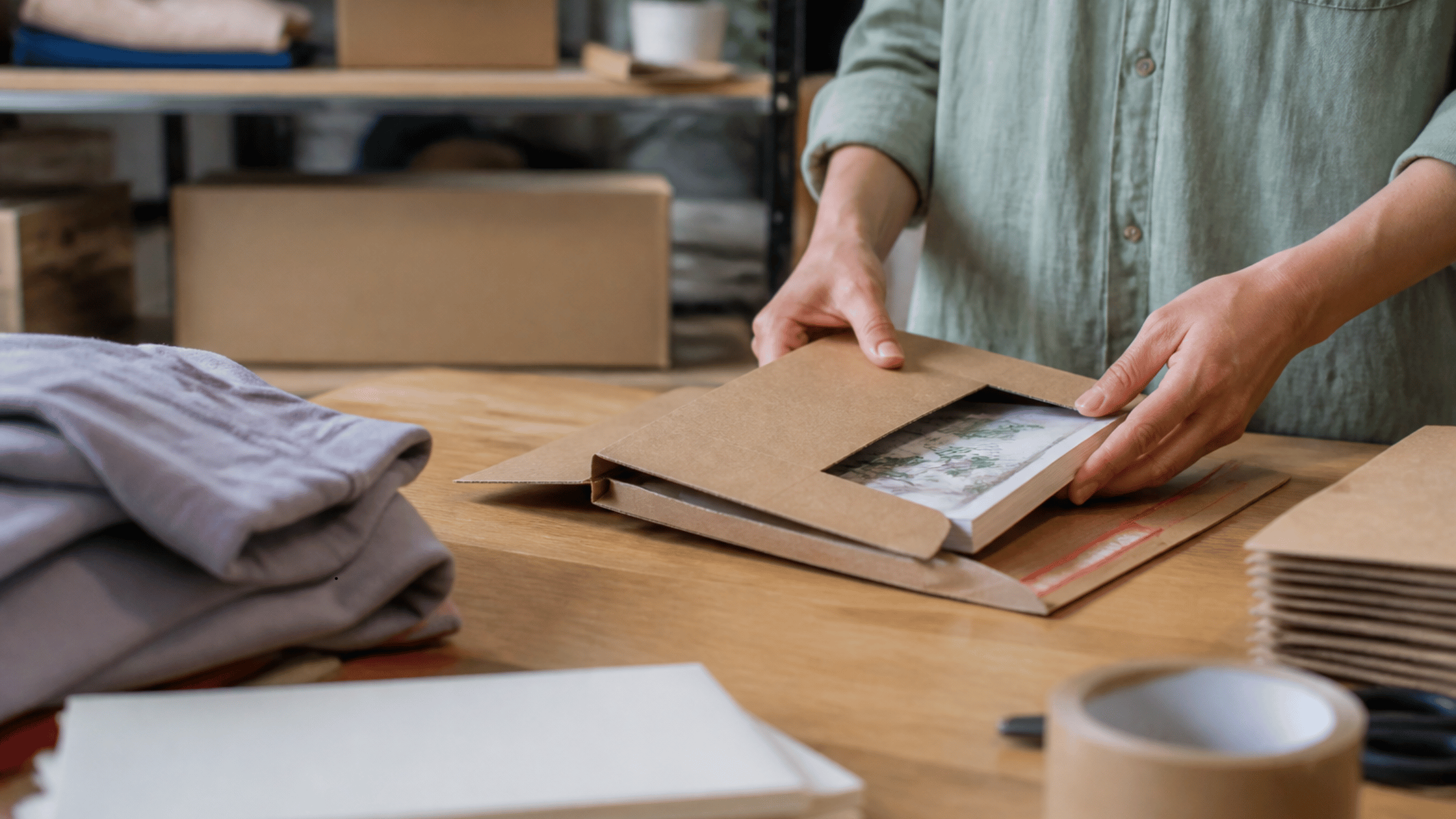
Rigid mailers work best for products that should stay flat and clean. Think 9×12 prints, paperback books, postcards, trading cards, folded apparel, and slim subscription packs. They also look more professional than a padded envelope for items that bend too easily.
Some brands move into custom mailer boxes once order count climbs—but for lighter first-class or priority shipments, flat mailers often cost less to store and pack.
When a flat mailer works better than a box, and when it doesn’t
Simple rule. Use a flat rigid mailer when the item is thin, not fragile, and doesn’t need bubble protection. Don’t use one for bulky apparel bundles, thick books in multi-unit orders, or anything that needs depth. Wrong fit. Higher damage rate.
Cardboard mailers cut postage, packing time, and wasted fill for small e-commerce brands
Bulky boxes waste money. Cardboard mailers use less space on the shelf, need less tape, and ship with less empty air— which matters fast once a brand packs 40 or 80 orders a day. For sellers comparing mailers vs boxes, the labor savings usually show up before the postage savings do.
Are mailers cheaper than boxes for USPS, Priority Mail, and First Class shipments?
The honest math is simple. A flat mailer often weighs less than a carton, filler, and tape combo, so USPS First Class and Priority rates can drop. Why pay for a large box if a rigid envelope handles books, cards, or prints just fine?
-
Lower postage: less weight, smaller parcel profile
-
Lower supply cost: fewer labels, less bubble, less void fill
-
Lower storage use: stacks flat (a huge win in tight stock rooms)
How cardboard flat mailers help reduce dimensional weight and packing supply costs
Dim weight hits soft-goods brands and print sellers harder than they expect. Cardboard mailers— especially 9×12 and other flat rigid mailers— keep the package close to product size, which cuts wasted rate charges. Some shops still keep boxes for sale for bulkier orders, but flat items rarely need that much space.
Why rigid mailers speed up pick-pack-ship work for growing business owners
Faster packing. Less motion. Fewer supplies. A picker can grab a label, insert the order, seal, and move on (no box building, no extra stamps or padded fill). And that speed adds up— especially during subscription runs or weekend order spikes.
Choosing the right cardboard mailers by size, strength, and product type
Which cardboard mailers fit the product without wasting postage or shelf space? The honest answer is simple: match the inside size to the item, then check stiffness, edge protection, and whether the piece can bend in transit. Too big, and the mailer shifts. Too small, and the corners get crushed.
Best uses for cardboard mailers: 5×7, 9×12, and large flat rigid mailers
Cardboard mailers work best when the pack is close to the product size—especially for flat mail. Common fits include:
-
5×7: postcards, greeting cards, photos, small prints
-
9×12: documents, magazines, thin books, art prints
-
Large flat rigid mailers: oversized prints, certificates, multi-piece sets
For sellers packing books or folded apparel, Industrial mailers give a rigid, professional option that stores flat (a big deal in tight stock rooms).
Rigid mailers for trading cards, postcards, photos, prints, and thin apparel
Thin products need support, not fluff.
Rigid mailers for trading cards, photos, or postcards stop bends better than a plain envelope, and they write up cleanly with an address label and return label. For thin apparel, scored mailer boxes often work better—they fold fast, hold shape, and still keep shipping weight low.
Cardboard envelope mailers vs padded, bubble, and poly mailer options
Not every mailer does the same job. Cardboard envelope mailers suit flat, rigid goods. Bubble mailers add cushion for small breakable pieces. Poly mailer bags are cheap and light, but they won’t protect corners. That’s the tradeoff.
Custom cardboard mailers and wholesale buying for brands that ship every week
About 30% of small e-commerce shippers waste storage on packaging that sits half empty, and that waste shows up again in postage. For weekly fulfillment, Cardboard mailers work best when the size matches the product, the board stays rigid, and the mail piece still qualifies for a sane USPS or first-class rate.
What to look for in custom cardboard mailers and custom mailer boxes wholesale
The smart buy isn’t just cheap stock. It’s fit, board strength, fold quality, and print space—all of which affect shipping and presentation later.
-
Size: 5×7 for cards, 9×12 for prints, larger flat mailer sizes for apparel inserts
-
Closure: self-seal tabs save time—fast
-
Rigidity: enough stiffness for photos, postcards, and printed inserts
-
Volume: brands that also use wholesale shipping boxes should compare case counts, not just unit price
And that’s exactly why buyers keep comparing mailers versus boxes. One inch too big can bump the postage rate. Bad move.
How printed mailers, labels, return address areas, and insert cards affect presentation
Printed mailers need clean address zones, a readable label area, and room for a return line (yes, that small detail matters). A custom mailer with a branded insert card feels polished—but if the surface smears or the stamp area crowds the address, the package looks sloppy.
Cheap bulk buying mistakes that raise the damage rate or the postage rate later
But here’s the thing. The lowest case price can cost more later—thin board bends, padded add-ons become necessary, and oversized cardboard envelope mailers force extra bubble or poly wrapping. Why pay twice? In practice, brands should test 25 to 50 mailers before placing a wholesale order. Small trial first. Then scale.
How to buy cardboard mailers that actually match your shipping method and customer promise
Bulky boxes aren’t the safe choice people think they are—bad fit drives waste, higher postage, and sloppy delivery. For books, prints, cards, and flat apparel, Cardboard mailers often protect better because they stay rigid, stack flat, and keep mail class costs under control.
What a rigid cardboard mailer is, and what sellers usually call these envelopes
A rigid cardboard mailer is a flat, stiff mailer—sometimes called stay-flat envelopes, cardboard envelope mailers, or rigid mailers. Sellers use them for 5×7 prints, rigid mailers, 9×12 formats, postcards, and trading cards (especially first-class or USPS-ready orders). If a brand also ships soft goods, Premium mailers can cover lighter, non-rigid orders.
How to check fit, closure style, label space, and mail class rules before you order
Before ordering, buyers should check four things:
-
Fit: leave about 0.25″ to 0.5″ for inserts or a bubble sleeve.
-
Closure: self-seal saves time—tuck tab styles feel cleaner for returns.
-
Label space: a 4×6 shipping label needs a smooth, flat panel.
-
Mail rules: rigid pieces may trigger parcel or package rate instead of letter postage.
That last point trips people up. USPS, FedEx, and other mail carriers sort by thickness, bend, and class—not just size.
Search intent match: best cardboard mailers wholesale for practical e-commerce shipping
For wholesale buyers, the smart move is simple: match the mailer to the promise. A photo print seller needs flat, rigid mailers; a subscription business may need printed options; a shop shipping 500 orders a month should read this cardboard box strategy for growing brands. Cheap units don’t help if returns spike. That’s the part people miss.
Frequently Asked Questions
Are mailers cheaper than boxes?
Usually, yes. Cardboard mailers and rigid mailers use less material, weigh less, and often cut postage for books, prints, apparel, and thin subscription items. If your product doesn’t need full corner crush protection, a mailer is often the smarter spend.
What are cardboard envelopes called?
People use a few names for them: cardboard mailers, rigid mailers, cardboard envelope mailers, and stay-flat mailers. The name changes by style, but the idea is the same—stiff paperboard packaging built to keep flat items from bending in the mail.
Can I mail cardboard in an envelope?
Yes, but don’t assume any envelope will do the job. If you’re mailing art prints, photos, documents, or trading cards, use a rigid or flat cardboard mailer instead of a thin paper envelope, because plain envelopes bend fast—and once they crease, that’s it.
What is a rigid cardboard mailer?
A rigid cardboard mailer is a stiff, fold-over mailer made to protect flat or semi-flat items during shipping. It’s thicker and firmer than a standard envelope, lighter than most boxes, and a strong fit for cardboard mailers 5×7, rigid mailers 9×12, photos, cards, and printed pieces.
When should I use cardboard mailers instead of bubble mailers?
Use cardboard flat mailers when bend protection matters more than cushioning. Bubble mailers help with light shock, but they don’t keep documents, prints, or postcards flat nearly as well. For books, folded apparel, or items with a little thickness, the choice depends on whether you need more stiffness or padding.
Are cardboard mailers good for USPS shipping?
Yes, if the size, thickness, and postage class match what you’re sending. Many sellers use rigid mailers USPS accepts for First Class or Priority shipments, but you still need to check weight, dimensions, labels, stamps, and machinability rules before mailing. Don’t guess on the postage rate. Check it first.
What size cardboard mailer should I choose?
Pick a mailer that gives your item a close fit without forcing it in. Cardboard mailers 9×12 are popular for documents, thin books, and art prints, while smaller sizes like 5×7 work for photos, greeting cards, and trading cards. Too much empty space invites bent corners—especially in mail sorting.
Can cardboard mailers be custom printed?
They can, and for growing brands, it’s often worth it. Custom cardboard mailers or custom mailer boxes wholesale help your package look cleaner, more intentional, and more professional (even before the customer opens it). Keep the print simple. A logo, return address, and one brand color usually look better than overdoing it.
Are cardboard mailers sold wholesale?
Yes. Cardboard mailers wholesale pricing usually drops fast once you move from small packs to case quantities, which matters if you ship every week. If you run an e-commerce business, buying wholesale mailers is almost always cheaper per unit than grabbing small packs from big retail sites.
Can I use cardboard mailers for trading cards, photos, or prints?
Absolutely—and this is one of their best uses. Rigid mailers for trading cards, photos, and art prints help stop bends far better than poly or padded envelopes, especially if you add sleeves, backing boards, or a small inner flat for extra stiffness. For collectible items, that extra layer is cheap insurance.
Small shipping setups don’t have room for dead space—or dead inventory. That’s why Cardboard mailers keep showing up as the smarter choice for sellers packing books, folded apparel, art prints, and subscription orders from a tight back room or even a spare table. They store flat, pack fast, and cut the need for extra fill that only adds cost and clutter.
There’s also the postage side. A slimmer pack usually means less wasted cube, fewer ugly dimensional surprises, and a cleaner path to lower shipping spend. And for brands shipping every week, that math adds up fast—especially once labor time and storage pressure start eating into margin. Not every product belongs in a flat mailer (thick, fragile, or odd-shaped items still need a box) — the right rigid mailer can handle more daily orders than most sellers expect.
So the next move is simple: measure the three products shipped most often, match each one to a rigid mailer size, and test a small case before the next reorder cycle. That one change can free shelf space, speed up fulfillment, and tighten shipping costs in the same week.


