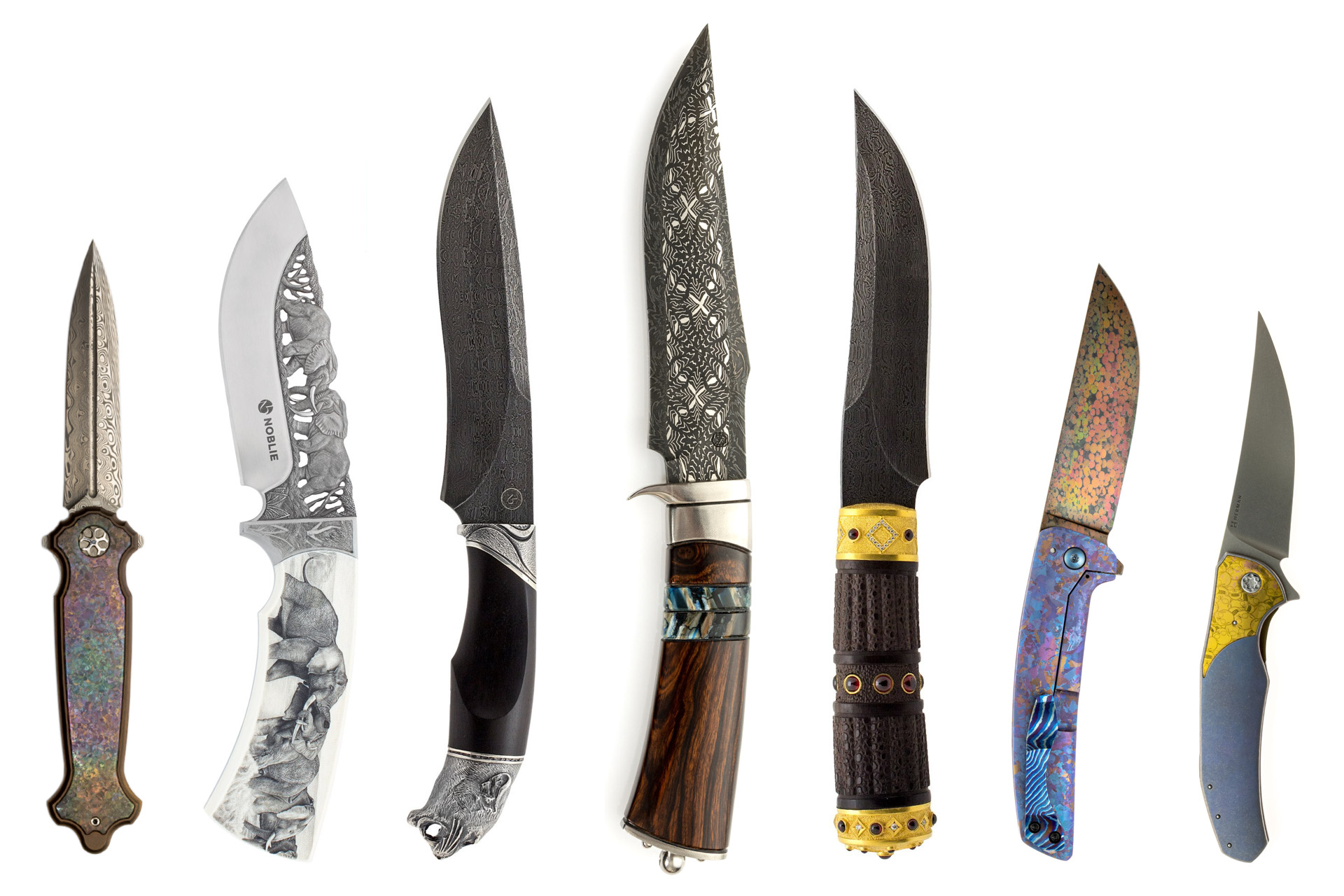
Library covers steels, locks, sharpening, materials, knife law, history, and authentication, with 2–3 new articles published weekly.
DENVER, CO, UNITED STATES, August 12, 2026 /EINPresswire.com/ — Noblie Custom Knives has expanded its online knife knowledge library with more than 200 expert guides covering blade steels, lock mechanisms, sharpening, sheath materials, edged-weapon history, knife law, and collector authentication.
The growing editorial library is designed for buyers, collectors, makers, everyday-carry users, and knife enthusiasts who want more than short product descriptions. Noblie said the project now functions as a reference base for readers comparing blade steels, choosing sharpening angles, identifying collectible knives, understanding historical blade forms, or researching U.S. knife law before purchase.
Recent additions reflect the technical range of the project. Steel coverage includes individual alloy guides and comparisons involving CPM S35VN, MagnaCut, M390, Vanax, RWL34, Damasteel, and other knife steels frequently discussed in the premium EDC and custom folder markets. Instead of ranking steels in the abstract, the guides focus on practical tradeoffs such as edge retention, toughness, corrosion resistance, sharpenability, heat treatment, and intended use.
Mechanical guides cover knife lock systems, pivot behavior, bearing systems, frame construction, and fit-and-finish evaluation. Noblie’s lock coverage compares mechanisms such as liner locks, frame locks, button locks, and crossbar-style locks by closing path, wear points, detent behavior, safety, maintenance, and suitability for different types of carry.
The library also includes practical knife ownership resources. Sharpening guides explain how edge angle affects slicing performance, edge stability, durability, and maintenance. Sheath and material guides compare leather, Kydex, handle materials, stabilization, natural inlays, and other construction choices that influence how a knife is carried, maintained, and used.
Historical and typological coverage includes guides on types of daggers, types of swords, types of knives, Bowie knife history, Swiss Army Knife identification, and collector-focused references such as authenticating the 1918 Trench Knife. These articles are written for readers who need construction details, period-correct features, blade-shape distinctions, and collector context rather than surface-level definitions.
Noblie has also added a 50-state U.S. knife law reference that separates federal rules from state-specific carry and possession laws. The guide covers topics such as federal switchblade law, ballistic knives, USPS mailing restrictions, TSA carry-on rules, local preemption, restricted places, and state-by-state legal differences. Noblie presents the material as legal information, not legal advice.
“The library exists because the questions buyers actually ask usually do not get good answers in product copy,” said Aleks Nemtcev of Noblie Custom Knives. “A buyer comparing MagnaCut to M390 does not want a spec sheet alone. They want to know which steel makes sense for the way they will actually use the knife. A collector trying to authenticate a 1918 Trench Knife needs construction details, not a repeated paragraph from a generic history page.”
The editorial library is organized around several recurring categories: blade steel and material guides, lock and construction analysis, sharpening and maintenance, historical edged weapons, knife identification, U.S. knife law, and buyer-focused selection guides. Longer reference projects are published alongside shorter practical guides, with Noblie currently adding approximately two to three new articles per week.
Noblie said the editorial position behind the library is simple: a reader should finish an article knowing what to do next. In a steel comparison, that may mean choosing a steel based on environment and use. In a sharpening guide, it may mean selecting a realistic edge angle. In a knife law guide, it may mean checking the controlling state statute rather than relying on a simplified chart.
The library supports Noblie’s broader role as both a custom knife retailer and a technical resource for people interested in blade craftsmanship. The company’s articles connect practical ownership questions with deeper topics such as forging, Damascus steel patterns, blade geometry, heat treatment, engraving, knife anatomy, historical edged weapons, and collector-grade presentation.
Specialized reference sections include the Noblie Knife Blog, the Knife Guide, the Knifemaking section, and the U.S. Knife Laws by State directory. The complete Noblie Custom Knives catalog is available at https://nobliecustomknives.com/.
About Noblie Custom Knives
Noblie Custom Knives is a New Jersey-based custom knife retailer and maker-focused knife brand serving collectors, premium everyday carry buyers, outdoorsmen, and knife enthusiasts in the United States and internationally. The company offers handmade folding knives, fixed blades, Damascus knives, engraved knives, art knives, daggers, swords, paracord beads, accessories, and collector-grade pieces, with a focus on premium materials, exact-piece presentation, custom commissions, and educational knife content.
Emma J. Hart
Noblie Custom Knives
email us here
Legal Disclaimer:
EIN Presswire provides this news content “as is” without warranty of any kind. We do not accept any responsibility or liability
for the accuracy, content, images, videos, licenses, completeness, legality, or reliability of the information contained in this
article. If you have any complaints or copyright issues related to this article, kindly contact the author above.

Media gallery